






Here’s something we see happen more often than we’d like.
An event organiser spends six months planning every detail: the venue, the speakers, the running order, the catering. Then, about three weeks before the event, someone remembers the trophy. It gets ordered quickly from wherever is convenient, arrives in a box, and is handed out on the night to polite applause.
Nobody says anything. But everyone notices.
Designing an event trophy well isn’t complicated. It does, however, require asking the right questions at the right time – and most people leave it too late to do either. These are the most common mistakes to avoid when designing a trophy for your event – and what to do differently.
Starting with the design before understanding the event
If you open a browser and search for trophy designs before you’ve asked what the trophy is actually for, you’ve already made the first mistake.
It sounds obvious when said plainly. But almost every generic award you’ve ever received started this way. Someone found a shape they liked, added a logo, engraved a name, and called it done. The result is a trophy that looks like a trophy and nothing more.
The event trophies that people keep – you know, the ones that end up on desks rather than in boxes in the attic or headed to the thrift store – start somewhere different. They start with the event itself. What is being recognised here? Who receives this award, and what does winning it mean in the context of this particular world?
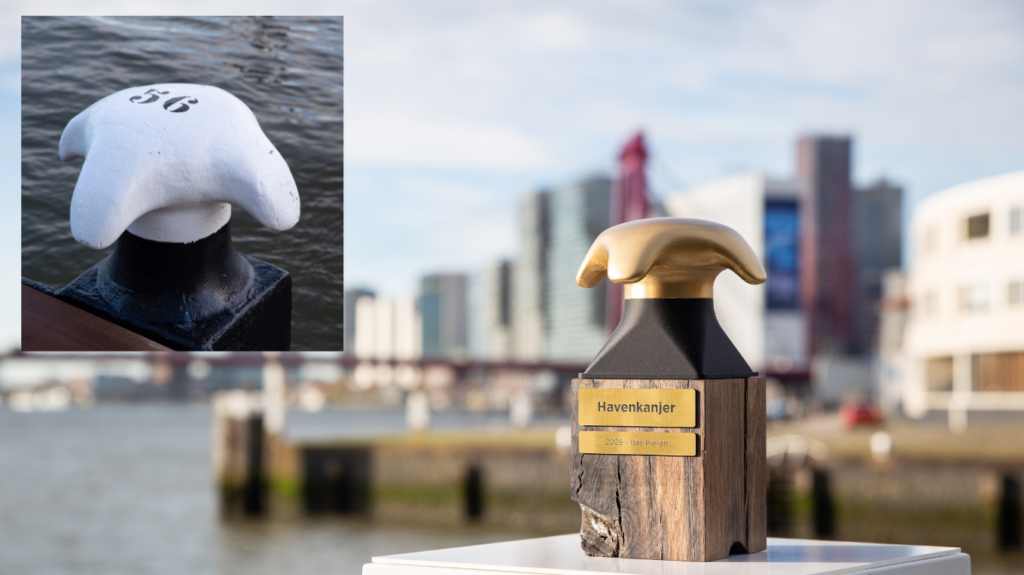
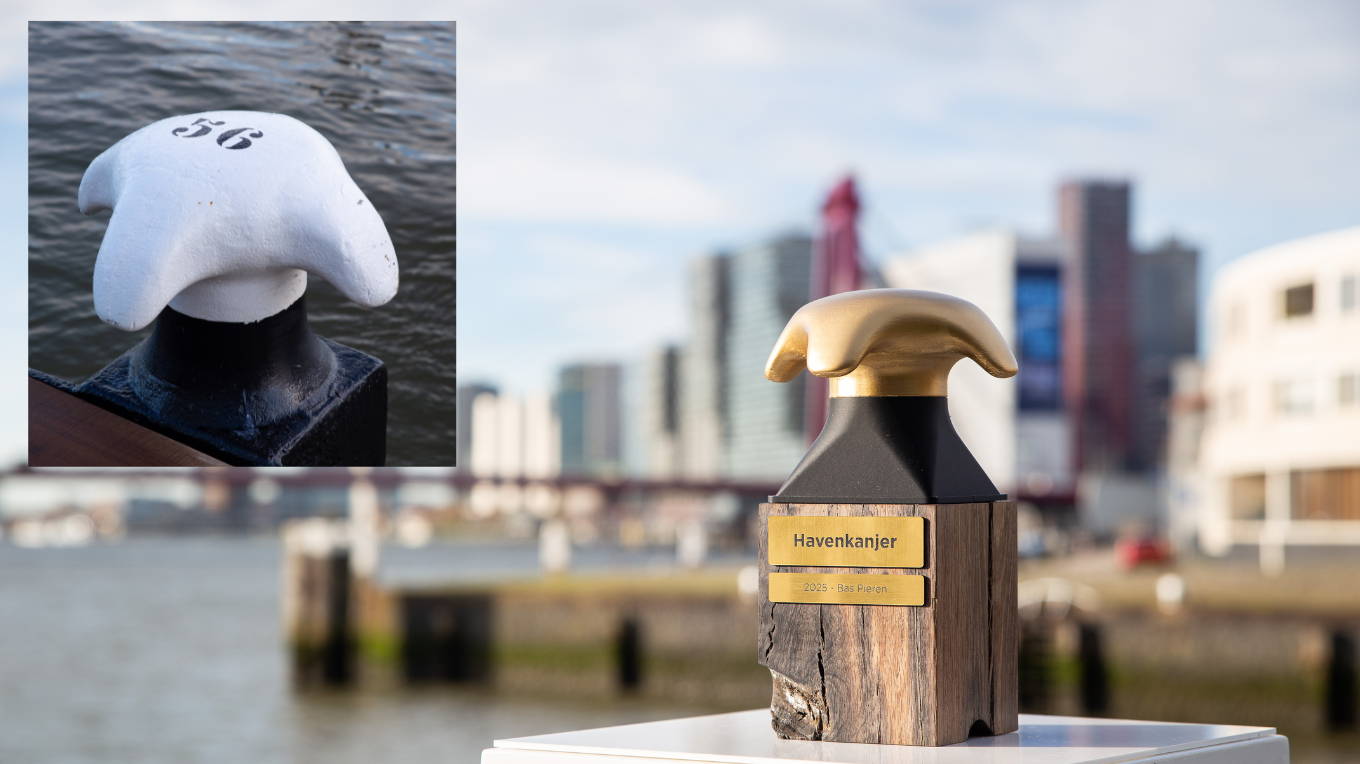
When we designed the Havenkanjer Trophy for workers in the Port of Rotterdam, we didn’t start with shapes. We started with the port. We looked at the people, the environment, the history. The golden bollard on top references the mooring structures you’ll find throughout the docklands. The wooden base is timber dredged from De Zeven Provinciën, a shipwreck that had been on the seabed of the Maasvlakte for centuries. Nothing in it is decorative for the sake of decoration. Everything is there because it belongs.
We started differently. We started with intention. And the result ended up being a trophy that reflected the event it was made for – not just another generic shape. The winners got more than an award: they received a slice of history. Things like that often get passed down through generations.
Confusing personalisation with custom event trophy design
These words get used interchangeably. They mean very different things.
Personalisation is taking a standard trophy and adding details – a name, a date, a logo, maybe a colourway. The object itself doesn’t change. You’re modifying something that already exists.
Customisation means starting with a blank page and building something around the specific event whether it’s the specific brand or the specific story being told. The shape isn’t chosen from a catalogue. The material isn’t a default. The design comes from somewhere, and that somewhere is the event itself.
A lot of organisations think they’re ordering a custom event trophy when they’re really ordering a personalised one. The difference shows up not on the night, but afterwards – in whether the award gets kept, shared, and talked about, or quietly put to one side and forgotten about.
Choosing trophy materials as an afterthought
Ask most people where they’d start when designing a trophy, and they’ll say the shape. Material comes later, once the form is decided.
We’d argue the opposite. Material is often the most interesting decision in the whole process, and leaving it until the end means leaving the best ideas on the table.
What a trophy is made from changes everything about it. How it feels in the hand. How it ages. What it communicates about the organisation handing it out. Whether there’s a story to tell about it at all. The materials used in high-end event trophies range from metals and crystal to reclaimed wood and recycled plastics – and the best material for a given trophy isn’t necessarily the most expensive one. It’s the one that means something in context.
There’s also a question of honesty. If your organisation has made public commitments around sustainability, the material you put into your awards should reflect that. A trophy is a brand touchpoint. It gets photographed, shared, kept. It keeps the conversation going after the event has finished, and hopefully it’s a conversation that reflects positively on your brand. It’s not the place to be inconsistent.
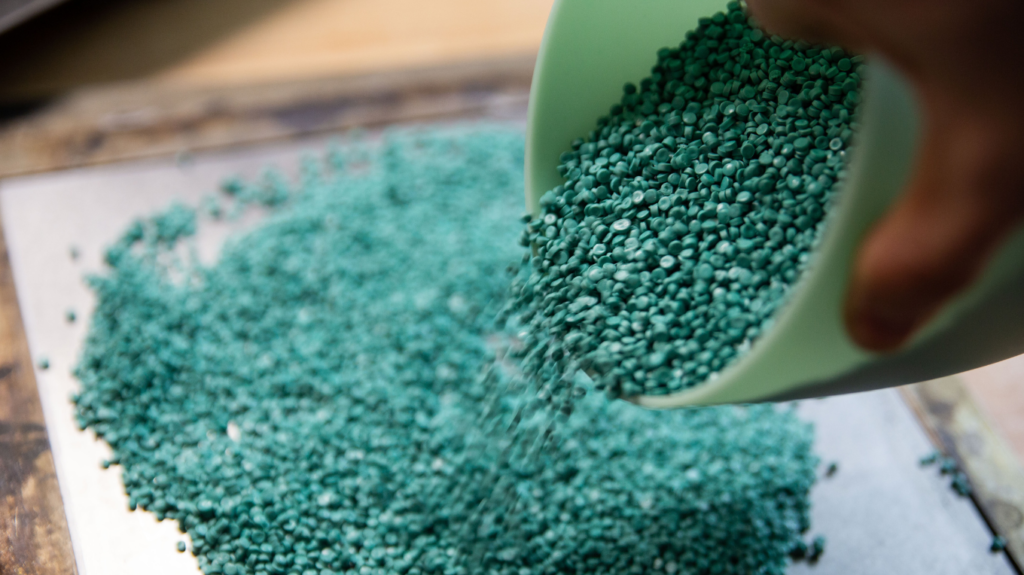
Every one of our awards comes with a material passport built into the base. Not a separate certificate, but a permanent part of the object itself. An accountability record of exactly what went into it and where each material came from. Not only does this create further value for the receiving party, but also adds another layer to the event itself.
An award that makes claims about what it stands for should be able to back them up, and what better way to do this than to demonstrate how your waste is being repurposed.
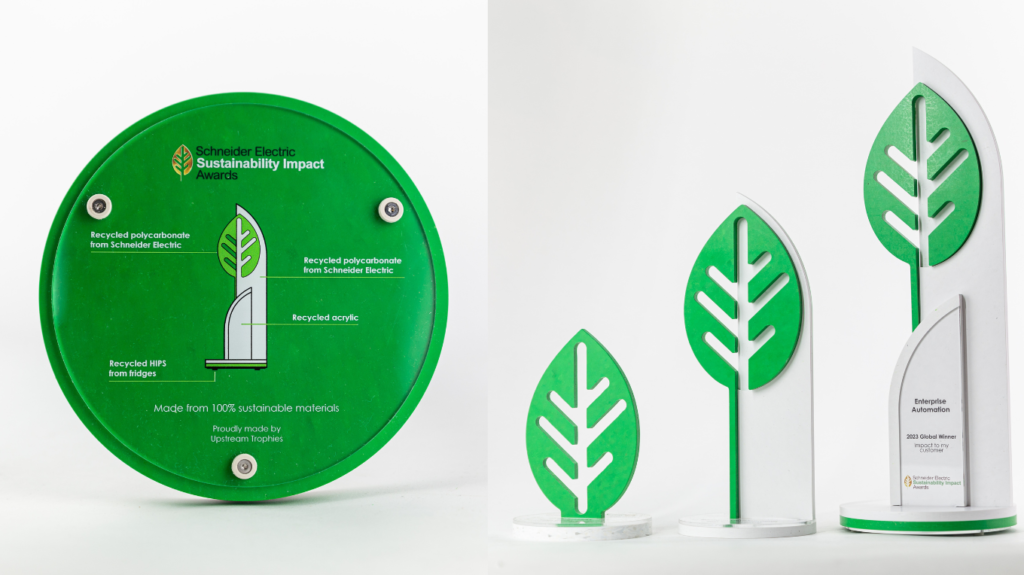
The award we made for Schneider Electric did exactly that. SE are prolific in the sustainability space, making energy more efficient for all. So an award which was made of their very own product waste was a fitting way to close the loop in their production.
Leaving the trophy brief too late
This is probably the most common mistake and the most avoidable (but also fixable – keep reading to find out how!).
When a trophy gets commissioned three weeks before an event, the options are limited. There isn’t time to develop a considered design, test materials, or have a proper conversation about what the award should communicate. You end up with whatever is available quickly, which is usually the same thing everyone else ordered in a hurry.
A custom event trophy (properly designed) takes around six weeks from start to finish. Two weeks for the design process, three to four for production. That timeline needs to be treated like any other event production element, built into the planning calendar from the start.
For cases like this, we developed our turbo service. If needed, we can create a trophy with custom engraving within 24 hours, and ship with a one-day service.
While our turbo service safety net is there to account for any oversights that lead to delays in the process, it still stands that the organisations consistently producing awards worth remembering are the ones that start the trophy brief early.
After all, starting early is the only way to ask the right questions before the decisions get made by default.
Designing for the brand and forgetting the recipient
An event trophy is, at its most basic, an object handed to a person to acknowledge something they’ve done. It’s easy to lose sight of that when you’re deep in branding conversations.
The temptation, particularly in corporate events, is to design the trophy around the organisation’s visual identity and stop there. Logo, brand colours, approved typeface – a physical representation of your brand guidelines. The award looks right on a press photo. It doesn’t necessarily mean anything to the person holding it.
The evidence on this is fairly consistent. Employee recognition research shows that the more personal the approach, the more effective the outcome – and the more likely the person is to stay engaged, stay motivated and, well… stay. It’s easy to spot recognition that feels considered. It’s even easier to spot recognition that feels like nothing more than a process.
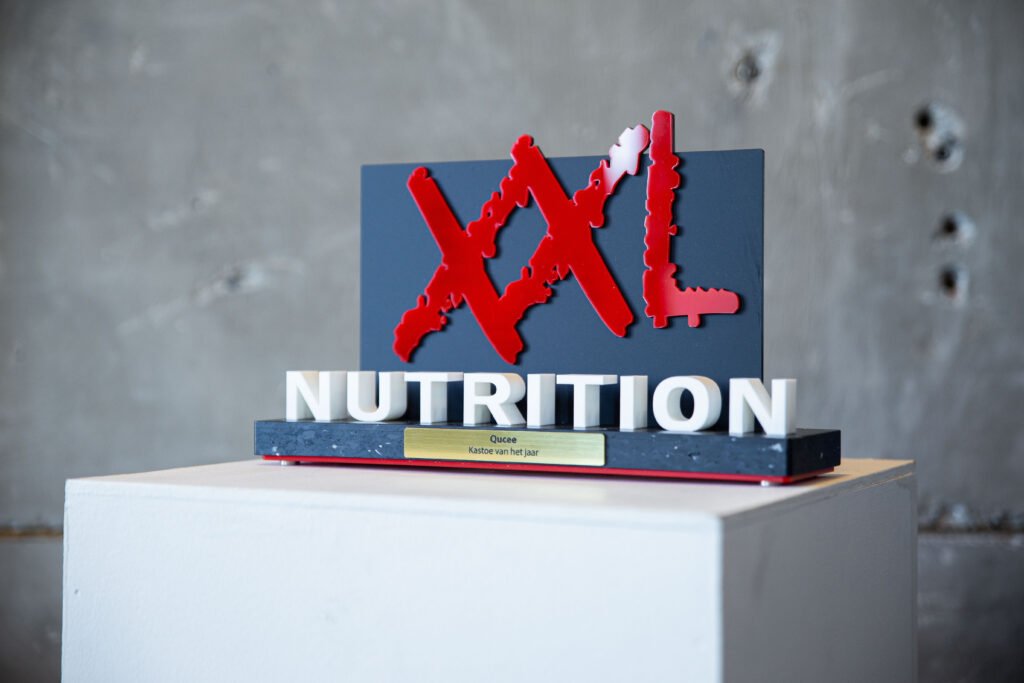
Trophies don’t need to be one-offs to be special. We’ve worked on many corporate award trophies where we’ve produced 50 of the same design. But that design is considered. The design process included a conversation about who receives this award, what it means to them, and whether the object reflects their achievement – not just the brand.
Treating the cheapest option as the most practical one
We know budget matters. Nobody is suggesting otherwise.
But there’s a version of budget-consciousness that mistakes cost for value, and it tends to produce awards that cost the organisation more in the long run than a better-designed trophy would have.
As mentioned in the previous section of this article, the investment on the award could be the difference between retaining or losing employees. Replacing an employee earning €28,500 a year costs around €35,000 once you factor in recruitment, onboarding, training and the productivity lost during the transition. Making an employee feel valued with a well-thought-out award costs a fraction of that figure.
Then there are the other benefits to consider: a well-made event trophy gets photographed at the ceremony, shared on social media, displayed in someone’s office, and occasionally ends up in a press article or two. It carries the brand into spaces the event itself never reaches, sometimes for years. A forgettable one doesn’t do any of that. It gets acknowledged on the night and disappears just as quickly as it was produced.
The question worth asking is what the trophy is worth relative to everything else being spent on the event, and what it will keep doing after the event is over. In most cases, the answer makes the investment look fairly straightforward.
Where to start instead
Most of the mistakes above come from the same source: the trophy brief starts too late and asks too little.
Starting early, asking better questions, and treating the award as part of the event strategy rather than a procurement task at the end of the list, is usually enough to produce something worth keeping.
If you’re at the planning stage and want to understand what a more considered process looks like, the Upstream Trophies event trophy guide covers the approach in more detail. Or get in touch directly – we’re happy to talk through a brief at whatever stage you’re at.
Frequently asked questions about designing a trophy for an event
The most common mistakes to avoid when designing a trophy for your event are: leaving the brief too late, starting with the shape before understanding the story, confusing personalisation with genuine customisation, treating the material as an afterthought, designing around the brand without considering the recipient, and choosing the cheapest option without accounting for what it costs in visibility and perceived value. Most of these mistakes share a common cause – the trophy is treated as an afterthought rather than as an integral part of the event.
A properly designed custom event trophy typically takes around six weeks from initial brief to delivery. This breaks down into roughly two weeks for the design process: concept development, material selection, and client approval, and three to four weeks for production. Rush timelines are sometimes possible depending on the complexity of the design, but they tend to limit what’s achievable. Building trophy design into the event planning calendar from the start produces consistently better results.
Starting too late is the most common and the most consequential. When a trophy is ordered in the final weeks before an event, the design process gets compressed into a catalogue choice. The second most common mistake is starting with the shape rather than the story: browsing designs before asking what the award is actually for, who receives it, and what it should communicate.
Personalisation means adding details (a name, a logo, a date) to a standard trophy. The object itself doesn’t change. A custom trophy is designed from scratch around the specific event, brand, and story being told. The shape, material, and form all come from somewhere specific rather than from a catalogue. Most people think they’re ordering a custom trophy when they’re actually ordering a personalised one. The difference tends to show up in whether the award gets kept and talked about, or quietly set aside.
Material affects how a trophy feels in the hand, how it ages, what it communicates about the organisation presenting it, and whether there’s a story worth telling about it. The best material for a given trophy isn’t necessarily the most expensive – it’s the one that means something in the context of the event. Organisations with sustainability commitments should also consider material transparency: a trophy is a brand touchpoint, and the materials in it should reflect the same values the organisation communicates everywhere else.
Trophy cost varies significantly depending on materials, complexity, quantity, and lead time. The more useful question is what the trophy is worth relative to the event budget and what it will keep doing after the event ends. A well-designed award gets photographed, shared, displayed, and talked about, sometimes for years. A generic one doesn’t. The return on a well-designed event trophy is rarely in the object itself; it’s in everything that happens because of it.
Yes, and for most organisations it should. Brand identity (logo, colours, visual language, values) gives a design process strong foundations to work from. The mistake is stopping there. An award designed entirely around brand identity without considering the recipient or the specific occasion can feel like a branded object rather than a meaningful recognition. The strongest event trophies carry the brand and the moment, not just one or the other.
The awards that end up on desks rather than in drawers tend to share a few qualities: they feel specific to the event they came from, they carry some kind of story in their material or design, and they communicate that someone thought carefully about them. Recipients can usually tell the difference between an award that was chosen with intention and one that was ordered under time pressure. The design needs to be considered which doesn’t necessarily mean complex.
Yes, whether it’s a sketch or an AI mockup, we can take your original ideas into account and base the trophy around this. After consdiering the material and practicalities of the design once in physical form, we will create a mock up of your design and send it to you for approval.